
Where should a porta potty go on a job site?
Start with the pump truck's path, not the unit itself. Our trucks need roughly 60 feet of straight clearance behind the drop point, same clearance a roll-off dumpster rental needs, since both get serviced by the same style of truck. Keep units within a reasonable walk of the work area but out of the main foot traffic line. On a construction site, OSHA 1926.51(c)(1) sets the ratio: one toilet for 20 workers or fewer, then one toilet seat and one urinal per 40 workers once you pass 20. That ratio drives how many units you place, not just where. If you're staging near an entrance for a home renovation porta potty job, keep the door swing clear of parked vehicles and material stacks. For construction site services across Ann Arbor, we walk the site with the foreman before drop-off whenever the layout is tight. A unit set on a slope, even a mild one, collects odor at the low corner faster, so flat beats close every time.
Do I need a permit to place a porta potty in Ann Arbor?
Placement in the public right of way, meaning a sidewalk, street shoulder or curb lane, needs confirming with the City of Ann Arbor before delivery. We do not guess at that answer for you, because the rule differs by street and by how long the unit stays. Private property, like a driveway, yard or fenced lot, generally does not carry that same right-of-way question, but check your porta potty permit requirements page for what to ask the city. The same logic applies to a dumpster placement permit: dumpster placement permit cost and rules vary by block, and a dumpster permit requirements call to the city beats an assumption. If you're setting up for a wedding at a private venue, permitting is usually simpler than a street closure event like a race. Our marathon and race restrooms jobs almost always involve a city conversation first, and we handle that coordination as part of the quote.
How many units and how far apart should they be placed?
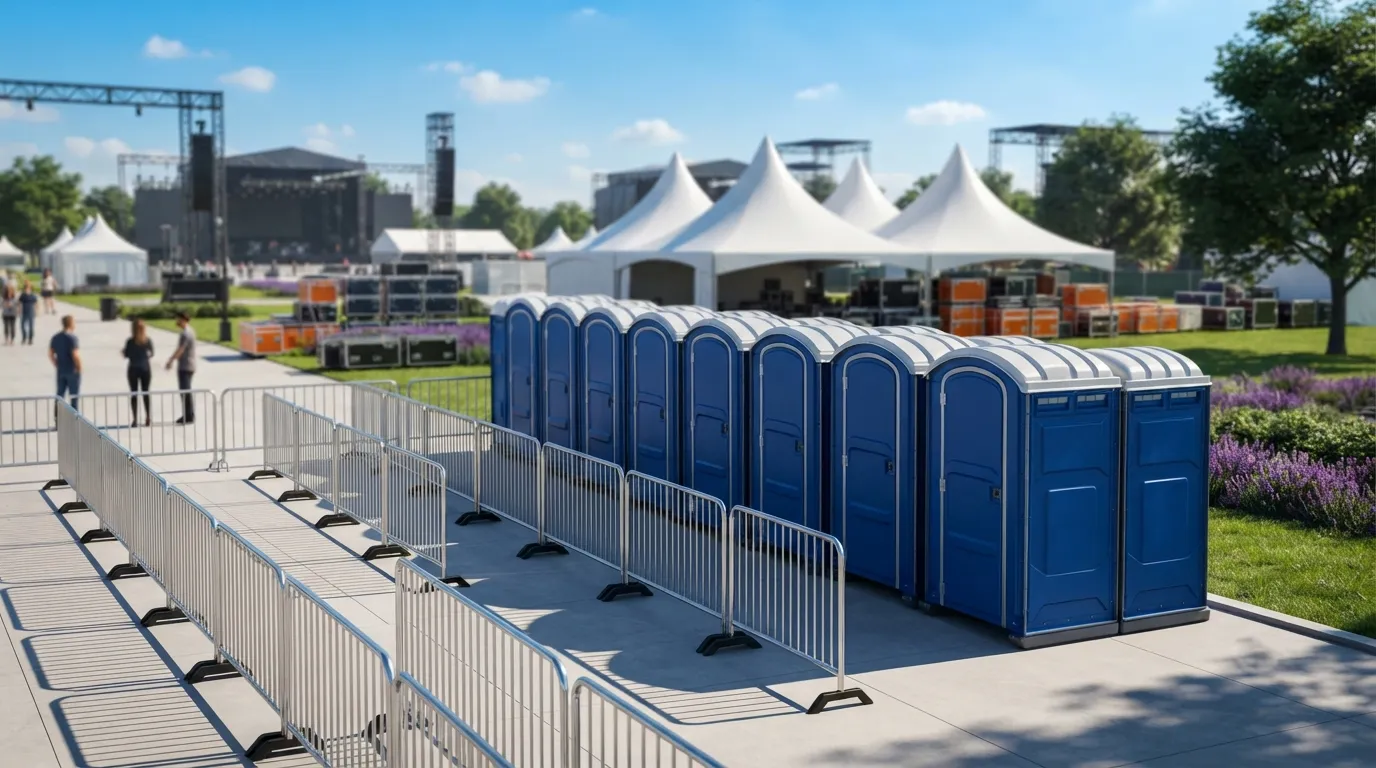
Spacing depends on crowd flow more than headcount alone. For an event, spread units into two or three clusters instead of one long row, so lines don't back into walkways. Our how many porta potties do i need guide walks through ratios for weddings, festivals and job sites. Every cluster needs an accessible unit: ADA Standards section 213.2 requires at least 5 percent of clustered single-user units to be accessible, and never fewer than one. That accessible unit needs a 60 inch turning circle inside per ADA Standards section 304.3.1, a 32 inch clear door opening per ADA Standards section 404.2.3, and a stable, slip-resistant approach surface per ADA Standards section 302.1. Ramp access, if needed, can't exceed a 1:12 slope under ADA Standards section 405.2. For a festival restroom rental or concert restroom rental in Ann Arbor, we map cluster locations against expected crowd density before the trucks roll.
What surfaces and site conditions should I avoid?
Avoid low spots that pool water, soft turf that ruts under a full tank, and anywhere within the swing radius of a gate or garage door. A standard unit carries a 60 to 70 gallon holding tank and stands about 92 inches tall, so overhead branches and low awnings matter too. Keep handwashing stations nearby but not blocking the door; if your crew is applying paints, coatings or pesticides, OSHA 1926.51(f)(1) requires washing facilities for exactly that kind of contaminant exposure. For general job-site sanitation, 29 CFR 1910.141(d)(2) calls for soap and towels or a hand-drying device, not sanitizer alone. If you're running a farm crew, OSHA 1928.110 sets a facility within a quarter mile walk for hand-labor workers. On septic-served properties, keep units clear of the drain field entirely; a residential tank is typically pumped every 3 to 5 years, and heavy equipment or extra units parked over the field can crush lines. That same clearance logic covers a septic pumping service truck needing access, whether you're near Ann Arbor or out toward Scio, 6.6 miles west, or Pittsfield, 6.1 miles south.
| unit | duration | typical price |
|---|---|---|
| standard | day | $150 |
| ada | day | $230 |
| standard | week | $200 |
| delivery_fee | day | $150 |
Prices above reflect measured typical rates; see porta potty rental cost for the full breakdown and porta potty rental per day for short jobs.
How far in advance should I schedule placement?
Book at least a week out for standard jobs, longer for events needing multiple clusters or ADA units, which run tighter supply. Emergency placement is possible; call our emergency porta potty rental line and we'll work around your site conditions same day when trucks are available.
Can a porta potty sit on gravel or dirt?
Yes, compacted gravel works well. Loose dirt or soft turf risks tipping under a full 60 to 70 gallon tank, especially after rain. We'll check the ground during delivery and reposition if needed at no extra walk-up.
Does placement change in winter?
Yes. Ice and snow load change footing and access. See our porta potty in winter page for how we adjust drop points and servicing routes during Ann Arbor's colder months.
What about placing a storage container or mobile office trailer on the same site?
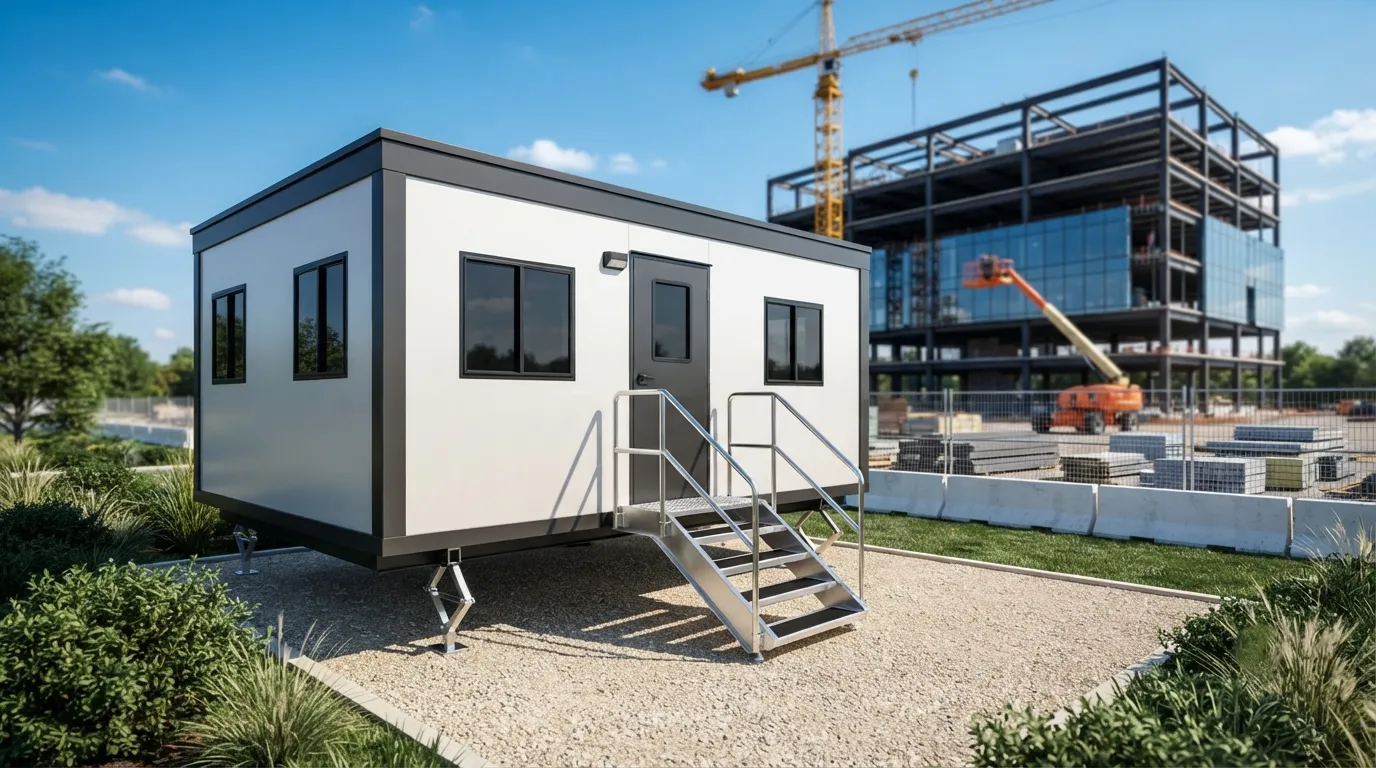
Same clearance rules apply. A storage container rental or mobile office trailer rental needs flat, stable ground and truck access; check door swing and replacement parts availability, like mobile office trailer replacement doors, before final placement.
Who do I ask about right-of-way placement in Ann Arbor?
The City of Ann Arbor confirms right-of-way rules directly; we don't guess. Contact us through request a quote and we'll coordinate that call as part of scheduling your porta potty rental in Ann Arbor.
Next step
Get a delivery date
Tell us the address, the dates and the headcount. We size the order and confirm the route.