
How Many Porta Potties Do I Need for a Construction Site?
OSHA 1926.51(c) sets the baseline: 1 toilet facility for 20 workers or fewer, then 1 toilet seat and 1 urinal per 40 workers once you cross 20, and 1 seat and 1 urinal per 50 workers once you hit 200 or more. A 15 person framing crew in Ann Arbor needs one unit. A 45 person crew needs two seats and a urinal setup, which usually means two standard units plus a urinal-only unit if your provider stocks one. Big commercial jobs pushing past 200 workers scale down to the 1-per-50 ratio, which sounds generous until you map it against a jobsite with three shifts and only one water source under OSHA 1926.51(a)(1). Multi-week jobs should also plan for monthly rental terms instead of renewing weekly, since the math works out cheaper. If your crew is spraying coatings, sealants or pesticides, washing facilities also come into play under OSHA 1926.51(f)(1), and that's separate from the toilet count entirely. Don't guess on this one. A city inspector who counts heads on-site and compares it to your unit count is not going to accept "we meant to order more." Check the OSHA portable toilet requirements page for the full bracket table before you place an order.
How Many Porta Potties Do I Need for an Event?
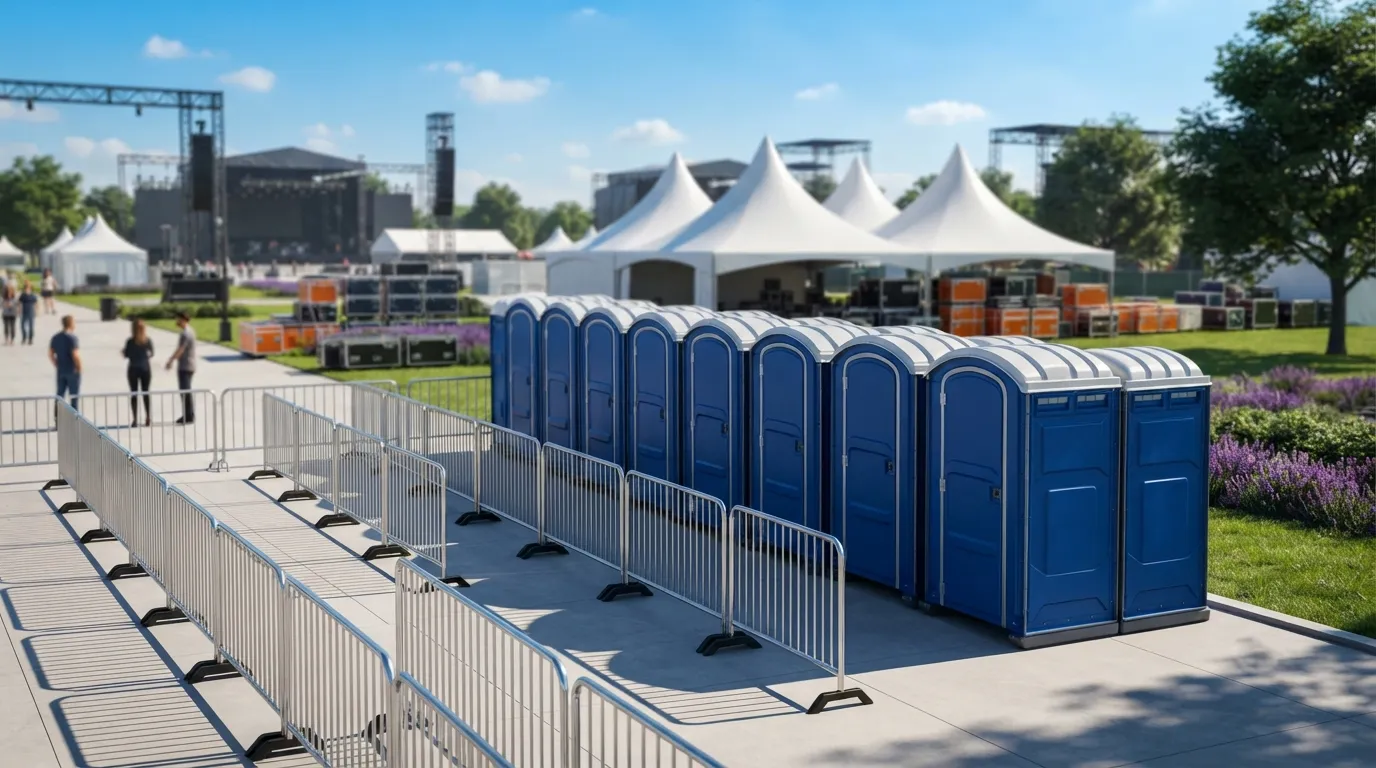
Events don't follow OSHA at all. They run on headcount and hours instead. The rule of thumb the industry uses: 1 unit per 50 guests for a 4 hour event, then add units as hours climb or as alcohol enters the picture.
| Guests | Event length | Units needed |
|---|---|---|
| 50 | up to 4 hours | 1-2 |
| 100 | up to 4 hours | 2-3 |
| 150 | up to 4 hours | 3-4 |
| 250 | up to 4 hours | 5-6 |
| 100 | 8 hours | 3-4 |
| 250 | 8 hours | 6-8 |
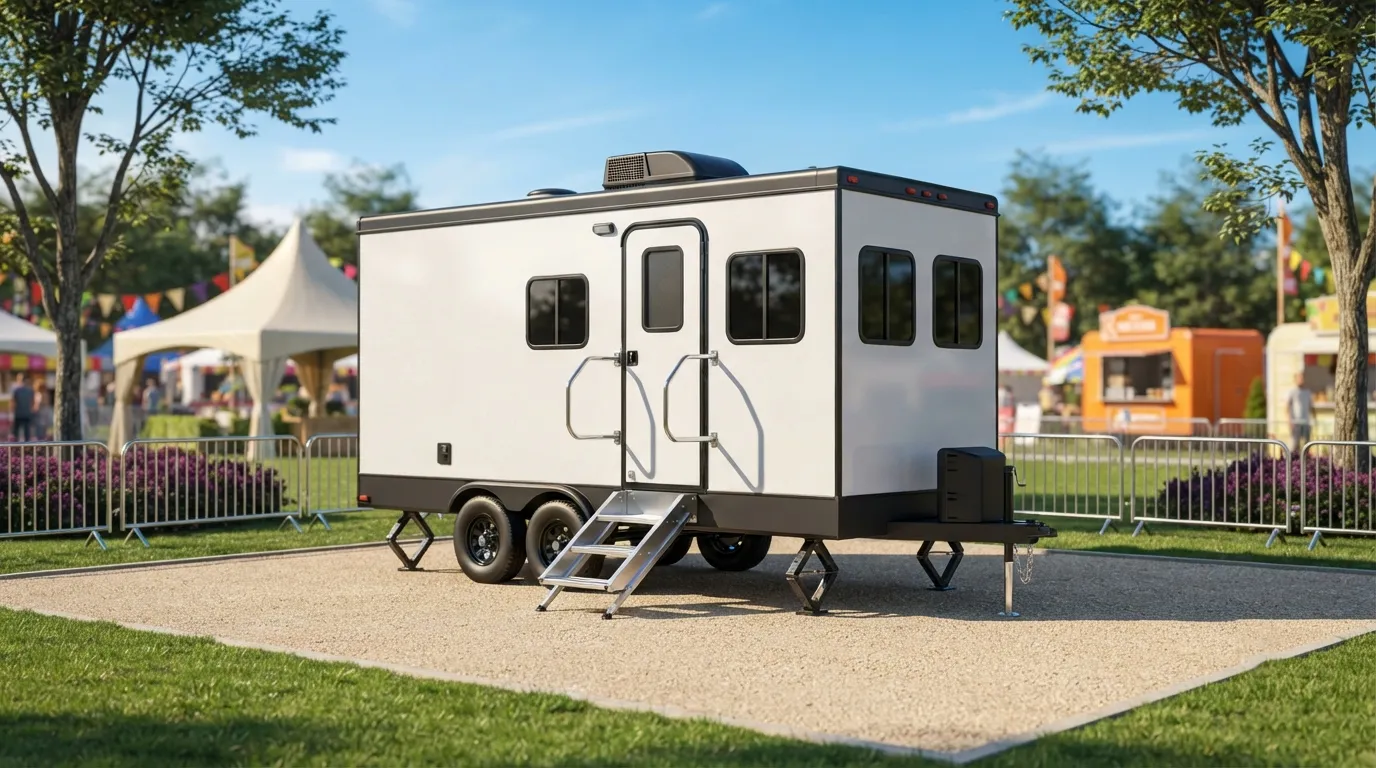
Alcohol changes the math because it increases both frequency and urgency. Add roughly 1 extra unit per 100 guests if you're serving beer or wine for more than 3 hours. A dry graduation party for 150 people might get by on 3 units; the same headcount at a wedding with an open bar runs closer to 5. Multi-day events, like a 3 day festival or county fair, need the daily count held steady across every day, not just day one, and you'll want service scheduled between days rather than at the end. ADA Standards section 213.2 requires that at least 5 percent of clustered single-user units be accessible, with a minimum of one, so a 6 unit deployment needs at least one ADA unit in the lineup. For anything over 300 guests, a restroom trailer often works out better than a wall of standard units.
What's a Worked Example for a Jobsite?
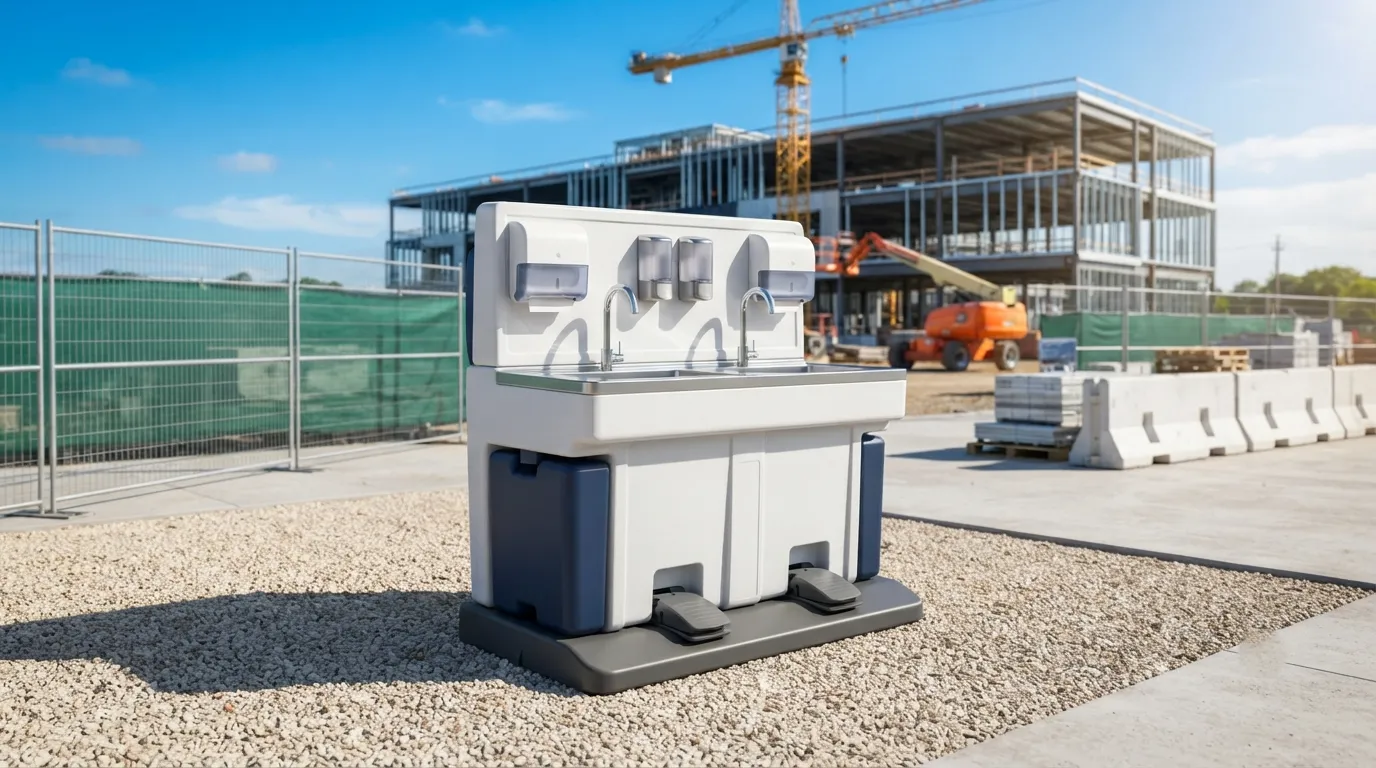
Take a 35 person residential renovation crew working an 8 hour day, no coatings or chemical spraying involved. Under 1926.51(c), 35 workers falls in the 20-to-under-200 bracket, so you need 1 toilet seat and 1 urinal per 40 workers, which rounds up to one full facility for this crew size. In practice that means one standard unit for a crew this size, priced in the day-to-week range depending on job length. If the same job runs past a month, switching to a monthly rate instead of re-upping weekly saves real money. Add a handwashing station too. General sanitation under OSHA 1926.51(c) doesn't specify sink counts, but 29 CFR 1910.141(d)(2) requires soap and towels or a hand-drying device wherever washing facilities are provided, and a hose bib doesn't satisfy that. A portable sink rental or handwashing station covers it. Check the porta potty rental cost page for how day rates versus weekly rates compare before you commit to a term.
What's a Worked Example for an Event?
Say you're planning a 200 guest outdoor wedding reception in Ann Arbor, running 6 hours with a full bar. Start from the 1-per-50 baseline: 200 guests gets you to 4 units minimum. Add the alcohol adjustment, roughly 1 extra unit per 100 guests over 3 hours of service, and you land at 6 units. Round up for guest comfort and mix in one deluxe flushable unit near the reception tent for anyone who wants something nicer than a standard stall. Add one ADA-compliant unit per ADA Standards section 213.2, since you're clustering more than one unit and 5 percent of six rounds up to one. That's 6 standard-tier units plus 1 ADA unit, or consider swapping the whole cluster for a restroom trailer with multiple stalls if the budget allows. A weekend rental for a wedding of this size falls into weekend event pricing rather than a straight daily rate, so ask your provider to quote it as a weekend package, not day-by-day.
Why Does the Ratio Get Tighter With More Guests?
Because bathroom lines don't scale in a straight line. A single line backing up at 45 minutes into a 4 hour event ruins the last 3 hours for everyone behind it. Doubling your guest count from 100 to 200 doesn't just double bathroom demand, it multiplies wait time at peak moments like right after a ceremony or between sets at a concert. That's why the per-50 ratio holds steady at low headcounts but the practical unit count creeps upward faster once you pass 150 or 200 guests, especially at events with a hard start and stop, like a marathon or a golf tournament where everyone needs a bathroom in the same 20 minute window near the finish or the clubhouse turn.
Does a Multi-Day Rental Change the Count?
No, the unit count per day stays the same, but service frequency and total unit-days go up. ANSI/PSAI Z4.3 sets a baseline of one service visit per week for up to 10 users over a 40 hour week, but a busy multi-day event blows past that baseline fast and needs daily or twice-daily servicing instead. A 3 day festival with 250 guests per day needs the same 6 to 8 units each day, not a growing pile across the weekend, so budget for weekend or multi-day rates rather than three separate day rates stacked together. Farms and agricultural operations have their own standard: OSHA 1928.110 requires field sanitation facilities, potable water, toilets and handwashing, for hand-labor employees, at one facility per 20 employees, within a quarter mile walk of the work area. That's a different ratio than construction or events, and it matters if you're staffing a harvest crew near Scio, 6.6 miles west of Ann Arbor, or Pittsfield, 6.1 miles south.
Where Does a Dumpster Fit Into This Math?
If you're planning porta potties for a renovation or construction job, you're probably also budgeting a dumpster, and size confusion there costs people money. A 10 yard dumpster runs about 12 feet long, and how many cubic feet in a 10 yard dumpster works out to roughly 1,296 cubic feet, right for a small cleanout. A 20 yard dumpster holds around 2,592 cubic feet, which is how many cubic feet in a 20 yard dumpster you're working with, and it carries roughly 2 to 3 tons depending on debris type, answering how many tons does a 20 yard dumpster hold for most renovation jobs. A 20 yard dumpster runs about 22 feet long, which answers how many feet is a 20 yard dumpster for anyone measuring a driveway. A 30 yard dumpster holds close to 3,888 cubic feet, and how many tons can a 30 yard dumpster hold comes down to roughly 3 to 4 tons for mixed debris, while a 40 yard dumpster holds around 5,184 cubic feet and tops out near 4 to 5 tons for mixed construction debris, which is how many tons does a 40 yard dumpster hold in most cases. Actual tonnage swings hard based on material, wet drywall weighs more than framing scraps, so check dumpster weight limits before you fill one past the line. A roll-off delivery needs about 60 feet of straight clearance behind the truck, so measure your driveway or street frontage before booking. Full details live on dumpster sizes and dimensions.
How many porta potties do I need for 100 guests?
Plan on 2 to 3 standard units for a 4 hour event, more if alcohol is served past the 3 hour mark. Add one ADA-compliant unit per ADA Standards section 213.2. A wedding or graduation party at this size usually pairs well with one deluxe unit near the main gathering area.
How many porta potties do I need for a construction crew of 50?
Under OSHA 1926.51(c), 50 workers falls in the 20-to-under-200 bracket, requiring 1 toilet seat and 1 urinal per 40 workers, so this crew needs two full facilities. Check OSHA portable toilet requirements for the complete bracket breakdown before ordering.
Do I need an ADA-accessible porta potty?
Yes, if you're clustering multiple units. ADA Standards section 213.2 requires at least 5 percent of a cluster to be accessible, with a minimum of one unit regardless of total count. See ADA restroom requirements for full clearance and reach specs.
How many tons does a 30 yard dumpster hold?
Roughly 3 to 4 tons for mixed construction debris, though heavier material like shingles or wet drywall fills the weight limit before the volume limit. Check dumpster weight limits for a breakdown by material type.
Should I add extra units if alcohol is served?
Yes. Add roughly 1 extra unit per 100 guests when alcohol service runs past 3 hours. A 150 guest event with an open bar for 5 hours should plan closer to 4 to 5 units instead of the standard 3.
How far in advance should I order for an Ann Arbor event?
Book as early as you can, especially for weekend events, since weekend rates and availability tighten fast. Start with a request a quote submission once your headcount and hours are set, and confirm placement using the porta potty placement guide.
Next step
Get a delivery date
Tell us the address, the dates and the headcount. We size the order and confirm the route.